Investment knowledge for informed decisions
Explore clear answers to frequently asked questions about precious metal bars, Unity Products, MALTA CoinBars, gold card solutions, and investment coins. Learn more about product differences, physical ownership, storage, pricing, taxation, and selection.
Guidance across all precious metal product ranges
Clear explanations of formats and product benefits
Information about ownership, storage, and pricing
Support in selecting the appropriate investment format
Essential information about physical precious metals and investment products
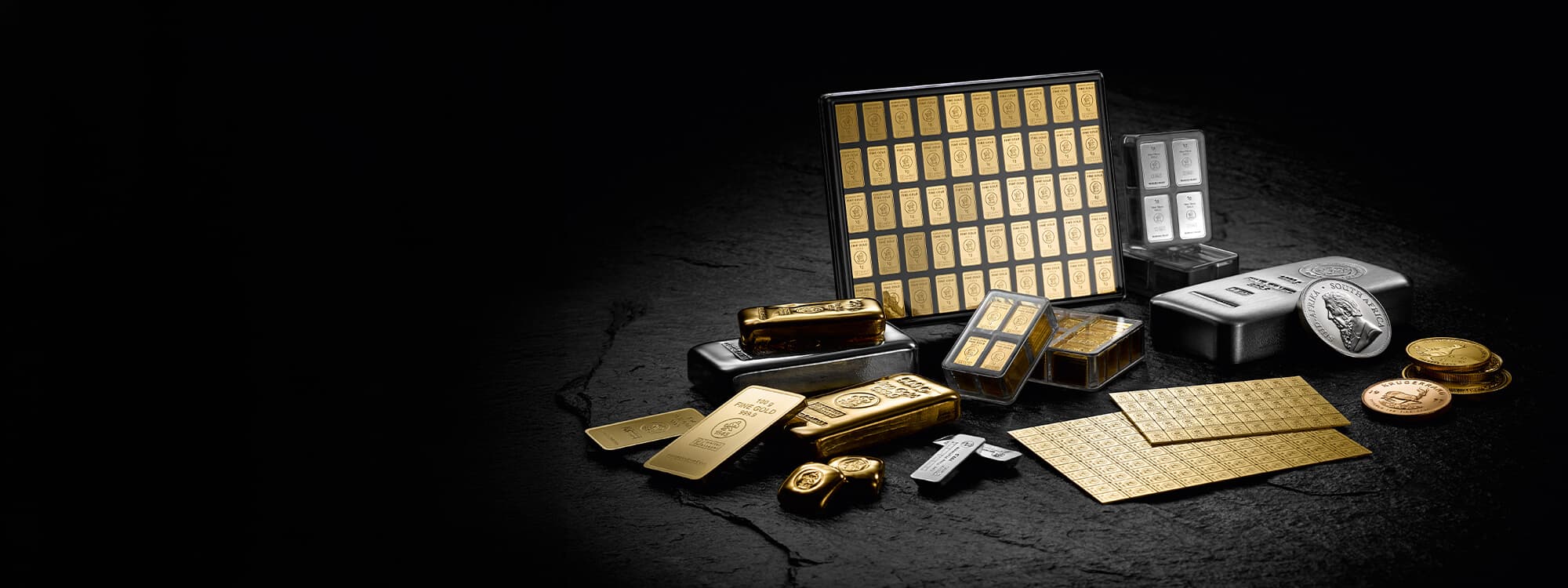
Physical precious metal products differ in material, denomination, manufacturing method, presentation, and intended use. This FAQ provides structured information about the investment solutions available from Heimerle + Meule. The answers explain important product characteristics and help you compare precious metal bars, Unity Products, MALTA CoinBars, FineCards, SecainCards, and coins according to your personal objectives and preferences.
Frequently asked questions about Precious Metals Bars
Precious metal bars are available in different materials, weights, finishes, and production formats. The following answers explain the differences between cast and minted bars, the meaning of fineness, the influence of denominations, and important aspects of purchasing, handling, storage, and physical precious metal ownership.
A precious metal bar is a physical product with a defined material, weight, and fineness. Bars are commonly manufactured from gold or silver and are available in different sizes and production formats.
Cast bars are produced by pouring molten metal into molds and have an individual surface. Minted bars are cut from rolled sheets and embossed to create precise dimensions, defined edges, and a uniform finish.
Both formats provide direct ownership of physical precious metals. The appropriate choice depends on the preferred weight, appearance, presentation, handling, and individual investment objective.
The casting process creates characteristic structures as the molten precious metal cools inside the mold. Minor visual differences are therefore a typical feature of traditionally manufactured cast bars.
The precise manufacturing method and refined presentation make minted bars particularly suitable for compact denominations, protected packaging, personal gifts, and gradual precious metal purchases.
A fineness of 999.9 indicates that 999.9 parts out of 1,000 consist of the stated precious metal. The remaining proportion may consist of technically unavoidable trace elements.
The suitable weight depends on budget, investment strategy, flexibility, storage, and intended future use. Smaller bars offer flexible individual units, while larger formats concentrate more precious metal in one product.
Manufacturing, quality control, packaging, and distribution costs apply to every individual bar. These costs therefore represent a larger proportion of the price for smaller denominations than for larger bars.
Bars should be stored securely and protected from damage, moisture, dirt, and unauthorized access. Possible storage solutions depend on the quantity, required accessibility, insurance coverage, and personal circumstances.
Protective packaging helps preserve the condition and presentation of a bar. Opening or damaging the packaging may affect its visual appearance and can complicate later handling, identification, or resale.
Frequently asked questions about Unity Products
Unity Products combine physical gold or silver with modular formats, small denominations, and structured storage. The following answers explain the differences between UnityBars, UnityBox, and the UnityBar Collection, as well as the benefits of individually removable units, replenishable formats, transparent capsules, and gradual investment.
Unity Products are modular precious metal solutions containing individual gold or silver bars. Their small denominations and organized formats support gradual purchases, individual removal, and flexible handling.
UnityBars consist of individual units that do not need to be broken apart. Selected formats can be replenished with separately available bars after individual units have been removed, gifted, or sold.
Separately available individual bars can be used to expand or replenish selected Unity formats. Availability depends on the specific precious metal, denomination, product version, and current portfolio.
Selected Unity formats are designed so that removed or gifted individual bars can be replaced with separately available units, allowing the original arrangement to be completed again.
Depending on the product version, Unity Products contain 999.9 fine gold or 999.9 fine silver in clearly defined denominations and individually presented units.
Small denominations support gradual precious metal purchases and provide flexibility when individual units are gifted, transferred, retained separately, or sold without affecting the complete holding.
Individual bars are enclosed in stable, transparent capsules designed to protect the precious metal against scratches, moisture, and dirt while preserving its appearance and organized presentation.
Individual units and coordinated product formats can be used as valuable gifts. The recipient receives physical precious metal in a compact denomination that can be stored, retained, or combined with further units.
Unity Products suit buyers who value small denominations, modular ownership, structured storage, individual removability, gradual purchases, or the option to replenish selected product formats over time.
Frequently asked questions about MALTA CoinBars
MALTA CoinBars combine physical precious metals with an official euro denomination and a design inspired by Malta and Valletta. The answers below explain their CoinBar concept, monetary status, precious metal content, available card and UnityBox formats, possible applications, product values, and differences from conventional bars and coins.
A MALTA CoinBar is a compact precious metal product combining the form of a bar with characteristics of a coin. It contains physical precious metal and carries a defined euro denomination.
The name describes the combination of two product categories. The compact format resembles a precious metal bar, while the denomination and official monetary status provide characteristics associated with a coin.
Each MALTA CoinBar carries a defined euro denomination and is issued under licence from the Central Bank of Malta, giving the product official monetary status.
The denomination and precious metal value are separate values. The market value of the contained gold or silver can differ from the euro denomination printed on the CoinBar.
The MALTA CoinBars portfolio includes selected formats made from 999.9 fine gold and 999.9 fine silver. The available material, weight, and quantity depend on the specific product version.
A CoinBar Card presents an individual CoinBar in a compact card format. A UnityBox combines several individually presented CoinBars in one structured and modular product format.
Unlike conventional bars, MALTA CoinBars combine defined precious metal content with a euro denomination, official monetary status, and a distinctive design inspired by Malta and its capital Valletta.
The Malta-inspired design, defined denominations, different precious metal variants, and coordinated product formats make MALTA CoinBars relevant for buyers interested in both physical precious metals and collectible concepts.
The combination of precious metal, Malta-inspired design, compact presentation, and official euro denomination makes CoinBars suitable for valuable gifts or distinctive souvenirs with lasting material value.
MALTA CoinBars should remain protected from scratches, moisture, dirt, and unauthorized access. CoinBar Cards and UnityBoxes support organized storage, while additional storage requirements depend on the quantity held.
Frequently asked questions about FineCards and SecainCards
FineCards and SecainCards both contain physical fine gold but serve clearly different purposes. The following answers explain their intended use, design, available weights, packaging, gifting possibilities, investment focus, resale orientation, and the most important factors for choosing the appropriate gold card solution.
FineCards are designed cards containing an integrated fine gold bar. They combine physical precious metal value with a high-quality presentation for personal occasions, business gifts, or symbolic starting capital.
SecainCards are compact cards containing integrated 999.9 fine gold bars. Their standardized and investment-oriented format is designed for physical gold ownership, efficient packaging, distribution, and resale.
FineCards focus on personal design, gifting, and emotional meaning. SecainCards focus on standardized execution, physical investment, efficient packaging, storage, distribution, and resale.
The existing FineCard portfolio includes designs with integrated 1 g or 2.5 g bars made from 999.9 fine gold. Availability may vary according to design, quantity, and current product range.
FineCards can be adapted to selected personal or business purposes. Depending on the project, the preferred design and number of integrated bars can be coordinated to create an individual presentation.
FineCards are suitable for occasions such as births, weddings, anniversaries, birthdays, graduations, business milestones, expressions of appreciation, or symbolic financial starting capital.
SecainCards contain physical fine gold and can form part of a precious metal holding. Gold prices can fluctuate, however, and physical gold does not generate interest or dividends.
Standardized packaging in larger units supports efficient distribution and resale. The existing SecainCard concept includes boxes containing 200 cards for commercial buyers and distribution partners.
Manufacturing, card production, quality control, packaging, and distribution costs apply to each unit. The additional costs can therefore represent a larger proportion of the price than with larger gold bars.
Choose FineCards when personal design, gifting, and symbolic meaning are central. Choose SecainCards when standardized execution, physical gold ownership, efficient packaging, or resale is the primary objective.
Frequently asked questions about Investment Coins
Investment coins combine physical precious metal ownership with established coin formats and professional minting. The following answers explain precious metal content, market value, condition, documentation, storage, differences from collectible coins and bars, and the factors that should be considered when selecting an investment coin.
An investment coin is a physical coin whose market value is influenced primarily by its precious metal content, current metal prices, condition, availability, and the characteristics of the individual issue.
Investment coins generally focus more strongly on precious metal content and established formats. Collectible coins may also derive value from rarity, design, condition, historical context, or collector demand.
Important factors include precious metal content, weight, fineness, current metal prices, condition, authenticity, availability, documentation, market demand, and the characteristics of the specific issue.
Age alone does not determine value. Condition, rarity, precious metal content, demand, provenance, mintage, and the individual characteristics of the issue can all influence market valuation.
Condition can affect visual quality, collector demand, professional classification, and resale value. Coins should therefore be handled carefully and protected from scratches, contamination, and mechanical damage.
Original capsules, cards, cases, or documented packaging help protect a coin and preserve its presentation. Removing a coin can expose its surface to fingerprints, scratches, moisture, or contamination.
Coins use an official or established coin format and may carry a denomination or issuing authority. Bars focus primarily on defined precious metal weight, fineness, production method, and material value.
A professional valuation considers the precious metal, weight, fineness, condition, authenticity, current market prices, documentation, and product-specific characteristics of the respective coin or issue.
Coins should be stored securely in suitable protective packaging and kept away from moisture, dirt, scratches, and unauthorized access. Storage should also reflect insurance and accessibility requirements.
Available products, product information, and current precious metal prices can be explored through Goldzeiten, the dedicated investment platform from Heimerle + Meule.
General precious metal investment questions
Physical precious metals can support long-term ownership and portfolio diversification, but every investment decision requires individual consideration. These answers address general topics including price fluctuations, income generation, purchasing costs, liquidity, storage, insurance, authenticity, taxation, and the role of professional advice.
No investment is entirely risk-free. Precious metal prices can rise or fall, and the value of a product may also be influenced by premiums, condition, market demand, currency movements, and selling costs.
Physical gold and silver do not generate ongoing interest or dividends. Possible returns depend mainly on future price developments and the difference between purchasing and selling conditions.
The spot price reflects a current market reference for the raw precious metal. A physical product price can additionally include manufacturing, packaging, distribution, logistics, and commercial premiums.
The difference can reflect manufacturing costs, distribution, logistics, market liquidity, dealer margins, product condition, testing requirements, and changing supply and demand.
Product markings, documentation, packaging, weight, dimensions, and professional testing can support verification. Valuable or uncertain products should be assessed by an established precious metal specialist.
Insurance requirements depend on value, quantity, storage location, existing household or business coverage, and individual risk. Buyers should clarify the applicable conditions directly with their insurer.
Tax treatment depends on the product, transaction, holding period, buyer, seller, and applicable jurisdiction. Individual tax questions should be reviewed with a qualified local tax adviser.
Liquidity depends on the precious metal, product format, denomination, condition, documentation, market demand, and available purchasing partners. Established products can generally be easier to value and trade.
Physical precious metals are commonly considered as one possible component of a diversified strategy rather than a complete replacement for other assets. The appropriate allocation depends on personal circumstances.
Current gold, silver, platinum, and palladium prices can be accessed through the precious metal pricing section of Heimerle + Meule. Product prices may differ from the underlying market reference.
Still have questions about investment products?
Our specialists advise you on precious metal bars, Unity Products, MALTA CoinBars, FineCards, SecainCards, and investment coins, helping you identify the product solution that best matches your individual requirements.